Top 10 Ways To Evaluate The User Experience And Interface Of Ai Platforms For Trading Stocks
The User Interfaces (UI) and the user experiences of AI-based stock trading platforms are crucial to their efficiency, usability overall satisfaction, and success. A poorly designed user interface can hinder decisions, even when the AI models behind the interface are robust. Here are the top 10 tips for evaluating the UX/UI of these platforms:
1. User-friendliness and ease of use are two important aspects to think about.
Navigation: Make it easy to navigate the platform including menus, workflows and buttons.
Learning curve: Evaluate the speed at which a novice user can understand and use the platform without extensive training.
Verify consistency in designs across different platforms (e.g. buttons, colour schemes, etc.).).
2. Check Customizability
Dashboard customization: Take a look for the possibility of being able to customize dashboards so that they display the relevant data including graphs, metrics, and graphs.
Layout flexibility – Make sure that your platform is able to allow users change the size or layout of widgets as well as charts.
Preferences and Themes: Determine whether the platform supports dark and light modes, or other preferences.
3. Visualize data using the Assess Tool
Chart quality. Check that your platform offers high-quality interactive charts (e.g. Candlestick charts and Line charts) with zooming/panning functionality.
Visual clarity – Examine to determine if the data are displayed clearly, using appropriate labels, legends, or tooltips.
Make sure that the visualisations have been constantly updated to reflect any change in market.
4. Test Responsiveness and Speed
Loading times: Ensure the platform loads quickly even when dealing with large datasets or complicated calculations.
Real-time Performance: Determine whether the platform is able to process data feeds with no lag.
Cross-device compatible: Make sure the platform works seamlessly on every device including mobile, desktop and tablet.
5. Assess Accessibility
Mobile app: Discover whether there's a fully-featured mobile application that allows trading on the move.
Keyboard shortcuts. Make sure that the platform you are using is compatible with keyboard shortcuts.
Accessibility features. Verify the platform's compliance with accessibility standards.
6. You can search and filter your results.
Search efficiency: Ensure the platform is able to allow users a quick search of stocks, indices or any other assets.
Advanced filters: Determine whether the user can apply filters to achieve specific results (e.g. by sector, capitalization, performance metrics).
Saved searches: Check whether the platform permits users to save searches they frequently use or filters.
7. Be sure to check for alerts and notifications.
Customizable notifications: Allow users to create alerts that are tailored to specific conditions.
Notification delivery – Verify whether alerts are delivered by multiple channels.
Examine the speed and accuracy of alarms.
8. Examine the possibility of integration with other tools
Broker integration: Make sure the platform integrates seamlessly with your brokerage account to allow simple execution of trades.
API access: Determine whether the platform allows API access to advanced users to build customized workflows or tools.
Third-party platforms: Examine to determine if your platform is able to be integrated with other programs (such as Excel Google Sheets or trading bots).
9. Evaluate Help and Support Features
Tutorials on Onboarding. Make sure that new users have the ability to access tutorials.
Help center – Make sure that your platform has an extensive support center or knowledgebase.
Customer service: Examine to find out if the platform has an efficient customer support.
10. Test Overall Test Overall
User feedback: Conduct research and testimonials to assess user satisfaction.
Trial period: You may make use of a demo or a no-cost trial to test the platform and determine its suitability.
Error handling: Examine how the platform handles errors and edge cases (e.g., invalid inputs or downtime of servers).
Bonus Tips
Aesthetics Functionality is important, but aesthetics are important, a pleasing design can improve the overall experience for users.
Performance under stress Test the platform to ensure that it remains flexible and stable in times of high volatility.
Find out if the platform offers an active user community in which users can exchange feedback and suggestions.
By following these tips You can easily evaluate the user interface and experience of AI trading platforms for stock prediction or analysis and make sure they're user-friendly, efficient, and suited to your trading needs. A great UI/UX can significantly enhance your ability to make educated decisions and execute trades effectively. View the most popular next page for stock tips for website advice including trading and investing, stock trading software, stock market ai, best artificial intelligence stocks, playing stocks, learn stock market trading, stock trading, artificial intelligence companies to invest in, ai stock predictor, cheap ai stocks and more.
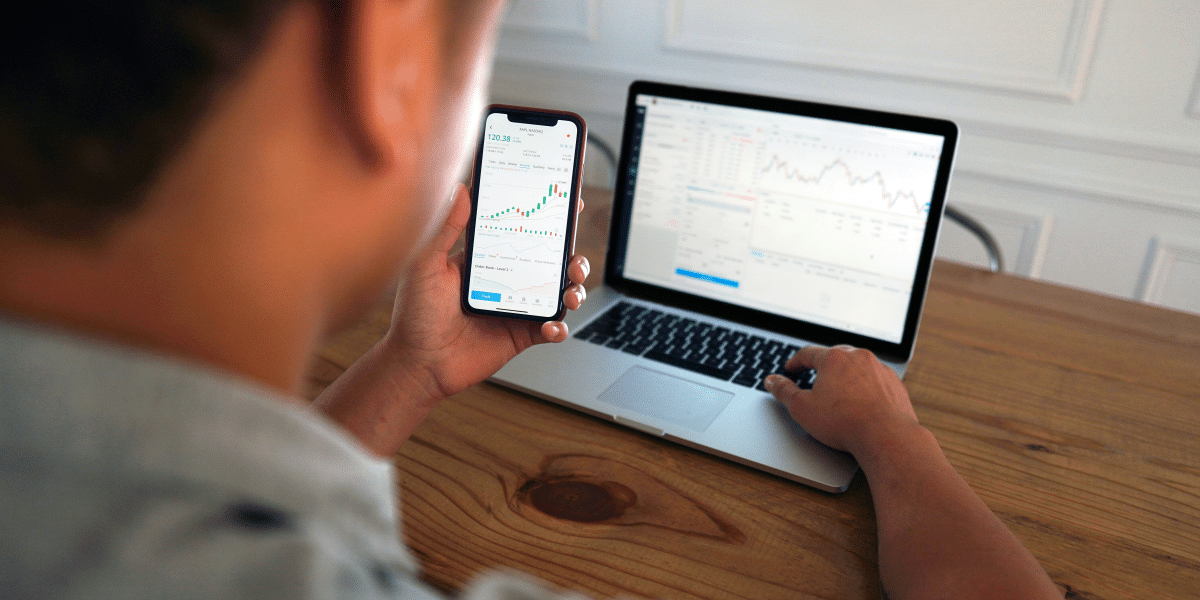
Top 10 Tips To Evaluate The Speed And Latency In Ai Platforms For Stock Prediction And Analyzing
The speed and latency of the trading platform is a crucial factor to consider, especially for active traders or high-frequency investors, as well as algorithmic ones. Milliseconds of delay could impact trade execution and profitability. Here are 10 of the best methods to gauge the speed and latency of platforms.
1. Real-Time data feeds can be used to assess the accuracy of the real-time data you have
Data delivery speed: Ensure the platform provides real-time data with the least amount of delay (e.g., less than a millisecond delay).
Closeness of data source: Determine if servers are located near major exchanges.
Data compression: Check to see if there are efficient methods of data compression that can accelerate the transfer of data.
2. Test Trade Speed of Execution
Speed of processing orders: How quickly the platform executes and processes trades after you have submitted an order.
Direct Market Access (DMA) Make sure that your platform supports DMA. This allows orders to be sent directly to the exchange without the necessity of intermediaries.
Execution Reports: Make sure that your platform provides detailed reports on the execution of orders, with timestamps.
3. Assess Platform Responsiveness
User interface (UI also known as speed of the user interface) The speed of user interface is a measure of how quickly the UI of a platform reacts to the inputs you enter (e.g. pressing buttons or loading graphs).
Chart updates: Verify whether charts and visualizations are updated in real-time, without delay.
Performance of mobile apps If you're using a mobile application, make sure that it's as fast as the desktop version.
4. Look for networks with low-latency infrastructure.
Server locations: The platform should use high-speed, low-latency servers which are close to major exchanges or financial hubs.
Co-location services: Find out whether the exchange offers co-location, which allows you to host your trading algorithm on servers close to the exchange.
High-speed Networks: Confirm the use of high-speed, fiber-optic network or other technologies with low latency.
5. Assess the Backtesting and Simulation speed
Check the speed at which your platform can analyse and analyze past data.
Simultaneous trade simulation The platform must be capable of simulated live trading with no apparent delay.
Parallel processing: Determine whether the platform uses distributed computing or parallel processing to speed up complex calculations.
6. Estimate API Latency
API response time: Measure how fast the platform's API responds to requests (e.g. getting market information, or placing orders).
Rate limits: Check if API has acceptable rates limits in order to avoid delays during high-frequency trades.
WebSocket support Make sure your system is running the WebSocket protocol for low-latency real-time streaming of data.
7. Test Platform Stability using Load
High-volume Trading: Play with large quantities of trading scenarios in order to test if your platform is responsive and stable.
Market volatility: Test the platform during periods of high market volatility to make sure that it can handle sudden price movements.
Stress testing: Determine if your platform provides tools for stress-testing strategies under extreme circumstances.
8. Evaluation of Connectivity and Network
Internet speed demands. Check that your connection is at the recommended speeds for the platform to guarantee optimal performance.
Redundant connection: Check to determine if there are any redundant connections available.
VPN latency: If using a VPN, verify whether it causes significant latency. Also, determine if the provider has alternatives.
9. Make sure you are aware of features that speed-optimize your computer.
Pre-trade analysis The platform should offer pre-trade analyses to optimize the order routing and execution speeds.
Smart order routing (SOR), also known as smart order routing, is a method for determining the most speedy and efficient execution sites.
Use the tools available on the platform to analyze and monitor latency in real-time.
10. Review Feedback from Users and Benchmarks
User reviews: Read user feedback in order to determine the platform's performance on latency and speed.
Third-party benchmarks. Look for independent benchmarks or reviews that evaluate a platform's speed with other platforms.
Case studies: Find out whether the platform provides case studies, or testimonials, highlighting its capabilities for low-latency.
Bonus Tips
Trial period: Try the demo or trial version for free to evaluate the platform's performance and latency in real-world situations.
Customer Support: Make sure whether the platform provides assistance with issues related to latency, or for optimization.
Hardware requirements: Determine if the platform requires specific hardware to ensure the best performance.
The following tips can aid in assessing the performance of AI trading platforms which predict or analyze stock prices. It will allow you to select a platform for trading that best meets your trading requirements and minimizes any delays. Low latency can be crucial for traders who trade high-frequency, or algorithmically where even a small delay could affect their profitability. Follow the top ai for trading stocks recommendations for more tips including best ai penny stocks, ai options trading, best stock prediction website, ai stock predictions, ai software stocks, trading ai tool, ai options trading, can ai predict stock market, stocks ai, invest ai and more.